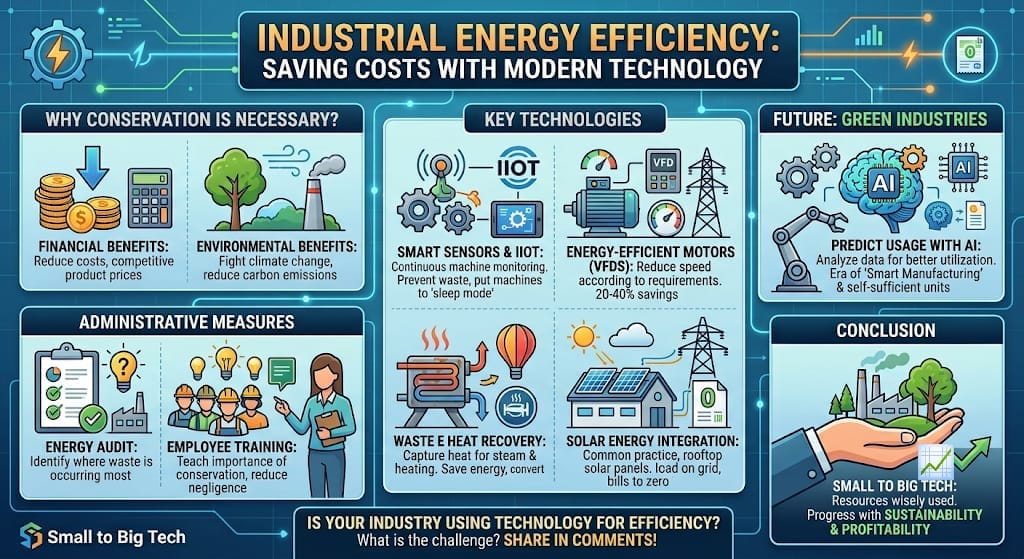
In the modern industrial era, energy acts as the backbone of any business. From factories to large manufacturing units, energy is consumed extensively everywhere. However, given the rising costs and environmental concerns, “industrial energy conservation” is no longer just an option but a necessity. In today’s post, we will explore how technology can help industries save energy and increase their profits.
Why is industrial energy conservation necessary?
Energy conservation offers two major benefits: financial and environmental. When an industry reduces its energy consumption, its costs decrease significantly, keeping the price of its products competitive. On the other hand, energy conservation helps reduce carbon emissions, which plays a vital role in our fight against climate change.
Key energy-saving technologies
1. Smart Sensors and IoT:
The use of the Industrial Internet of Things (IIoT) is a new revolution in industries. Smart sensors continuously monitor the efficiency of machinery. When a machine is not in use, these sensors automatically put it into “sleep mode” or turn it off, preventing unnecessary waste of electricity.
2. Energy-efficient Motors (VFDs):
Industrial machines use large motors. A technology called “Variable Frequency Drives” (VFD) controls the motor’s speed according to the work requirements. This can reduce electricity consumption by 20 to 40 percent.
3. Waste Heat Recovery:
In many industries, a large amount of heat is wasted during operations. Waste heat recovery technology captures this wasted heat and converts it back into energy, which can be used to heat buildings or generate steam.
4. Integration of Solar Energy:
Installing solar panels on industrial rooftops has now become common practice. Generating your own electricity not only reduces the load on the grid but also brings energy bills down to almost zero in the long run.
Administrative measures for energy conservation
Technology alone is not enough; a change in management mindset is also necessary:
- Energy Audit: Conducting regular energy audits is essential to identify where energy is being wasted the most.
- Employee Training: Often, machines are left running simply due to negligence. Teaching employees the importance of energy conservation is a simple yet effective practice.
- Replacing Old Machinery: New and modern machines are far more energy-efficient compared to older ones.
Future direction: Green Industries
In the future, Artificial Intelligence (AI) will predict energy usage in industries. AI systems will analyze data to determine when and where energy can be utilized more efficiently. This will be the era of “smart manufacturing” where every unit will be energy self-sufficient.
Conclusion
The journey of “Small to Big Tech” is only successful when we use our resources wisely. For industries, energy conservation is not just saving; it is a path to progress that combines sustainability and profitability. If we adopt technology today, our industries will not only be more profitable tomorrow but will also contribute to building a better world.
Is any modern technology being used to save energy in your industry or office? What do you think is the biggest challenge? Let us know in the comments!
Stay connected with “Small to Big Tech” for a better and sustainable future through technology!