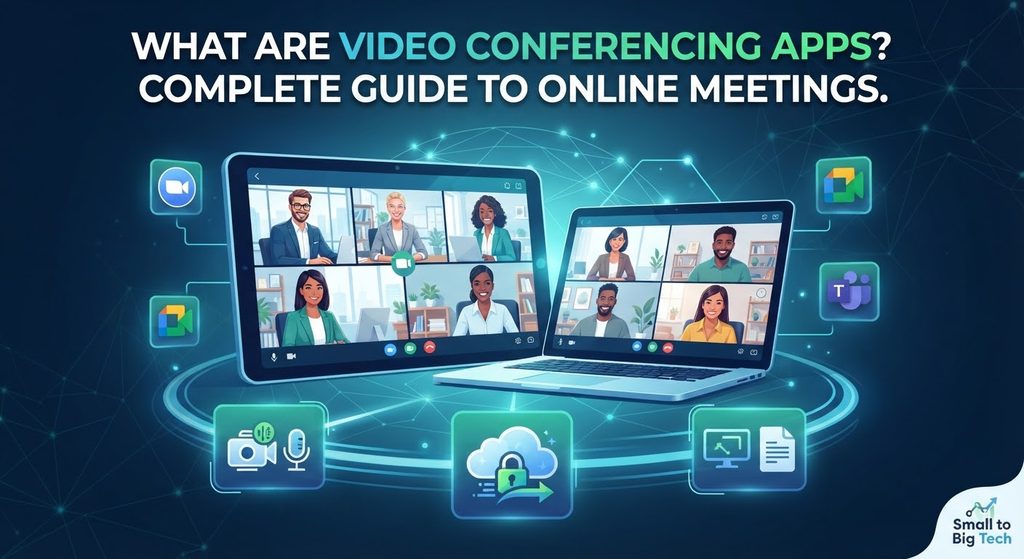
In today’s modern digital and fast-paced world, technology has completely bridged human distances and erased them altogether. A person sitting in any corner of the world can now not only easily talk to someone in another corner but also see them face-to-face. There was a time when attending an essential business meeting, office consultation, or educational lecture required long travel, wasting a great deal of valuable time. However, in today’s era, video conferencing apps have made our lives extremely easy and dynamic. With just a single click, hundreds of people can gather in a virtual room at the same time and exchange their thoughts.
If you belong to the world of technology blogging, online business, or digital communication, deeply understanding this foundational concept of video conferencing apps and all their features is essential for you. Today, on this platform of “Small to Big Tech,” we will discuss this topic in extreme detail so that you can learn how these modern softwares are driving our daily office and educational systems.
What Are Video Conferencing Apps?
Video conferencing apps are advanced digital software and mobile applications that provide two or more people with the wonderful facility of audio and video calls simultaneously via the internet. In olden times, phone calls were limited to the exchange of sound, but these modern apps have combined the power of cameras and the internet to eliminate the sense of distance.
These apps not only offer the opportunity to talk face-to-face but also feature countless powerful capabilities such as screen sharing, document exchange, digital whiteboards, and instant messaging. This is precisely why offices, universities, and organizations worldwide are relying on these digital platforms today instead of sitting face-to-face.
How Do Video Conferencing Apps Work?
The entire system of video conferencing is based on highly complex and modern computer networking technology. When you start a call through an app, data is exchanged under the following steps:
1. Recording Data via Camera and Microphone
Your smartphone’s or computer’s camera and microphone convert your voice and video into digital signals. These signals are too large to be transmitted directly over the internet.
2. Compression and Encryption Process
The software compresses this digital data to make it small so that it can travel rapidly across the internet, while also encrypting it to prevent anyone from hacking or intercepting the conversation in transit.
3. Cloud Servers and Streaming
This data travels via your internet to the relevant app’s cloud servers, which immediately route it to the devices of other participants. This entire process occurs in a fraction of a second so cleanly that not the slightest delay is felt in audio and video.
Most Important Benefits and Features of Video Conferencing Apps
These modern-day apps have completely transformed the way work is done worldwide, with several major benefits including:
1. Saving Time and Money
Meetings can be attended from any corner of the world without the heavy expenses of travel, plane tickets, and hotel stays. This saves companies billions of rupees in capital.
2. Screen Sharing and Presentation
Users can share their computer or mobile screens with all other participants during a meeting. This allows the direct display of reports, slides, and software code.
3. Recording and Document Exchange
Important office meetings and educational lectures can be recorded and saved so that those who could not attend the meeting can view them later. Additionally, files can be shared via the chat box.
Popular Video Conferencing Platforms Available in the Market
Today, several apps have taken the digital world by storm:
- Zoom: This is the most popular and widely used app globally, known for its easy navigation and excellent video quality.
- Google Meet: Google’s marvelous app is integrated with Gmail and is extremely reliable in terms of security.
- Microsoft Teams: This is the ultimate platform for large corporate companies and educational institutions, consolidating office tasks into a single place.
Traditional Physical Meetings vs. Video Conferencing Apps
- Traditional Physical Meetings: Require all individuals to gather in a single room, incurring heavy travel expenses, wasted time, and administrative challenges.
- Video Conferencing Apps: Bring an entire team together on a single screen within seconds from home or an office desk, representing an extremely fast, cheap, and modern approach.
Conclusion
Video conferencing apps have forever changed the modern way of working, studying, and connecting with one another. The walls of distance have now fallen due to technology, turning the entire world into a global village. Our goal at “Small to Big Tech” has always been to provide you with honest and accurate technical information so that your hard-earned money and time are used correctly.
Which video conferencing app do you use most frequently for your daily office meetings or chatting with friends? Let us know in the comments!
Stay connected with “Small to Big Tech” for the latest information from the world of technology, digital tools, and the best guides!